

Why Study in India? A Complete Guide for International Students from Africa and SAARC Countries
Choosing the right country for higher education is one of the most important decisions a student makes. Beyond choosing a course or university, students and their families must consider education quality, tuition fees, living expenses, career opportunities, cultural experience and the value of a degree.
While countries such as the USA, UK, Canada and Australia have traditionally attracted international students, India is increasingly becoming an attractive alternative for students seeking quality higher education at competitive costs.
With a diverse higher education system, English-medium programmes, growing technology and business sectors, and scholarship opportunities for international students, India offers several pathways for students from Africa and South Asia.
For students from countries such as Nigeria, Ghana, Kenya, Tanzania, Uganda, Nepal, Bangladesh, Bhutan and Sri Lanka, studying in India can open doors to academic development, international exposure and new professional opportunities.
But what makes India a worthwhile study destination? Let’s explore.
1. Why Is India Becoming a Popular Destination for International Students?
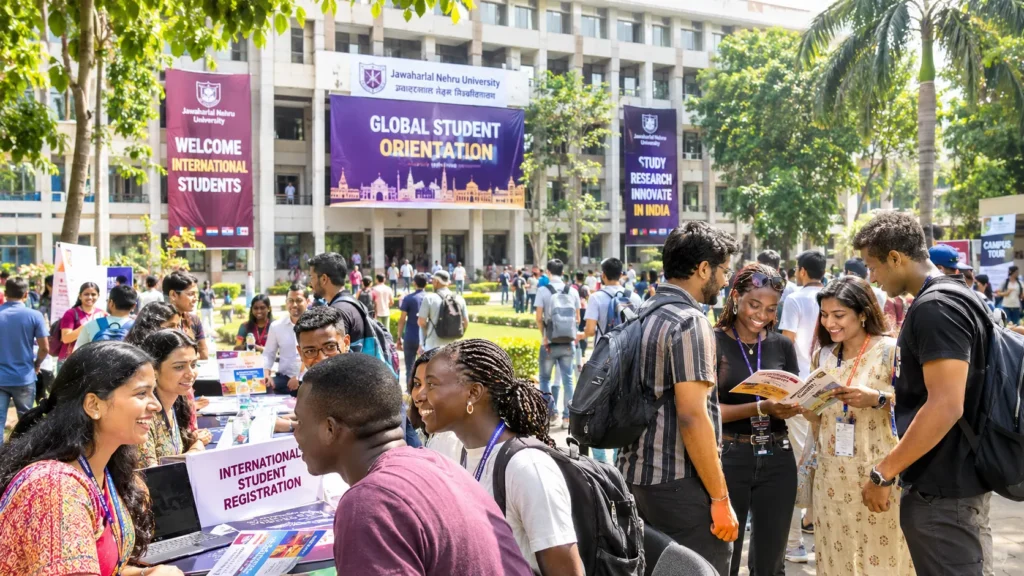
India has a long history of welcoming students from neighbouring countries and other parts of the world. Its higher education system includes central universities, state universities, private universities, Institutes of National Importance and specialised institutions.
According to the QS Global Student Flows 2026 report, India had an estimated 58,000 international students in 2025, with inbound student numbers projected to grow by approximately 7% annually over the following five years.
South Asia and Sub-Saharan Africa are expected to be important contributors to this growth.
Several factors are driving this interest:
- Competitive tuition fees compared with many traditional study destinations.
- A wide selection of undergraduate and postgraduate programmes.
- English-medium education across many institutions.
- Government-supported scholarships for eligible international students.
- Exposure to India’s growing technology, healthcare and business sectors.
- Cultural connections with neighbouring countries and established educational relationships with African nations.
India is not simply an alternative for students who cannot afford education elsewhere. It is a destination worth considering for the range of academic opportunities and experiences it offers.
2. Top Reasons to Study in India
2.1 Quality Higher Education and Recognised Universities

India has an extensive higher education ecosystem offering programmes across engineering, medicine, business, technology, science, agriculture, humanities and many other disciplines.
Students can explore different types of institutions, including government-funded universities, private universities and specialised institutes.
When selecting a university, international students should examine its UGC recognition, NAAC accreditation, NIRF ranking, where applicable, and relevant professional approvals.
It is equally important to check whether the qualification will be accepted by the relevant authorities in their home country.
The right university is not necessarily the one with the highest ranking. It is the one that matches a student’s academic goals, budget and future plans.
2.2 Affordable Education and Living Costs
One of the biggest considerations for international students is the total cost of education.
India offers a wide range of institutions with different tuition structures, allowing students to explore options according to their financial circumstances.
Apart from tuition fees, students should consider:
- University admission and registration charges.
- Hostel or private accommodation.
- Food and daily expenses.
- Local transportation.
- Books and academic materials.
- Healthcare and personal expenses.
Living costs also vary between cities. Expenses in Bengaluru, Mumbai and Delhi may differ considerably from those in cities such as Jaipur, Pune or other university towns.
The important advantage is flexibility: students can compare institutions, locations and accommodation options before making a decision.
2.3 English-Medium Education
Language is an important consideration when choosing an international study destination.
Many Indian universities offer academic programmes taught in English, particularly in engineering, computer science, business administration, pharmacy, healthcare and science.
This can make India an accessible destination for students from English-speaking African countries, including Nigeria, Ghana, Kenya and Uganda.
For students from countries where English is not the primary language, studying in an English-medium environment can also help strengthen communication and professional skills.
However, students should always confirm the language of instruction and any English proficiency requirements with their chosen university.
2.4 Wide Range of Courses and Career Options
India offers academic opportunities across traditional disciplines as well as emerging industries.
Some popular study areas for international students include:
| Study Area | Popular Programmes |
|---|---|
| Engineering | Civil, Mechanical, Electrical, Computer Science |
| Information Technology | AI, Data Science, Cybersecurity |
| Business | BBA, MBA, Finance, Marketing |
| Healthcare | MBBS, Nursing, Pharmacy, Physiotherapy |
| Science | Biotechnology, Chemistry, Microbiology |
| Agriculture | Agricultural Science, Agribusiness |
| Commerce | BCom, Accounting, Economics |
| Hospitality | Hotel Management, Tourism |
| Emerging Technologies | Renewable Energy, Robotics |
Whether a student wants to pursue engineering, healthcare, business or technology, India offers a diverse selection of academic pathways.
2.5 Exposure to a Growing Technology and Business Ecosystem
India is home to a rapidly developing technology, startup, manufacturing and services ecosystem.
Cities such as Bengaluru, Hyderabad, Pune and Chennai have established technology and business communities.
Students pursuing subjects such as computer science, artificial intelligence, engineering, business and biotechnology can benefit from studying in an environment where these industries play an important role.
This exposure can help students understand industry developments, emerging technologies and professional practices.
However, studying in India does not automatically guarantee an internship or job. Employment opportunities depend on individual qualifications, university facilities, employer requirements and applicable immigration regulations.
2.6 Scholarships for International Students
Scholarships can make higher education more accessible for eligible international students.
The Indian Council for Cultural Relations (ICCR), under the Government of India, offers scholarship programmes for students from several countries.
Some relevant schemes include:
- India-Africa Maitri Scholarship Scheme: Opportunities for eligible African students pursuing undergraduate, postgraduate and doctoral programmes.
- Suborno Jayanti Scholarship Scheme: Scholarship opportunities for Bangladeshi nationals.
- Sushma Swaraj Silver Jubilee Scholarship Scheme: Opportunities for Nepalese nationals.
- Dr. B.R. Ambedkar Scholarship Scheme: Opportunities for Bhutanese nationals.
- Aid to Sri Lanka Scholarship Scheme: Opportunities for eligible Sri Lankan students.
- Aid to Maldives Scholarship Scheme: Opportunities for Maldivian students.
The 2026–27 ICCR scholarship programme lists 1,513 slots under the India-Africa Maitri Scholarship Scheme and 500 under the Suborno Jayanti Scholarship Scheme.
Scholarship coverage, eligibility, course restrictions and application deadlines vary. Some schemes cover tuition and provide additional allowances, while certain expenses may remain the student’s responsibility.
Students should consult the official ICCR scholarship portal before applying.
2.7 International Exposure and Multicultural Learning
Studying abroad is about more than earning a degree. It is also an opportunity to understand different cultures, develop independence and build international relationships.
Indian universities bring together students from different countries and backgrounds.
International students can interact with classmates from different regions, participate in cultural activities, develop communication skills and build friendships that extend beyond their academic years.
For African and SAARC students, this experience can provide valuable exposure to different perspectives, traditions and professional environments.
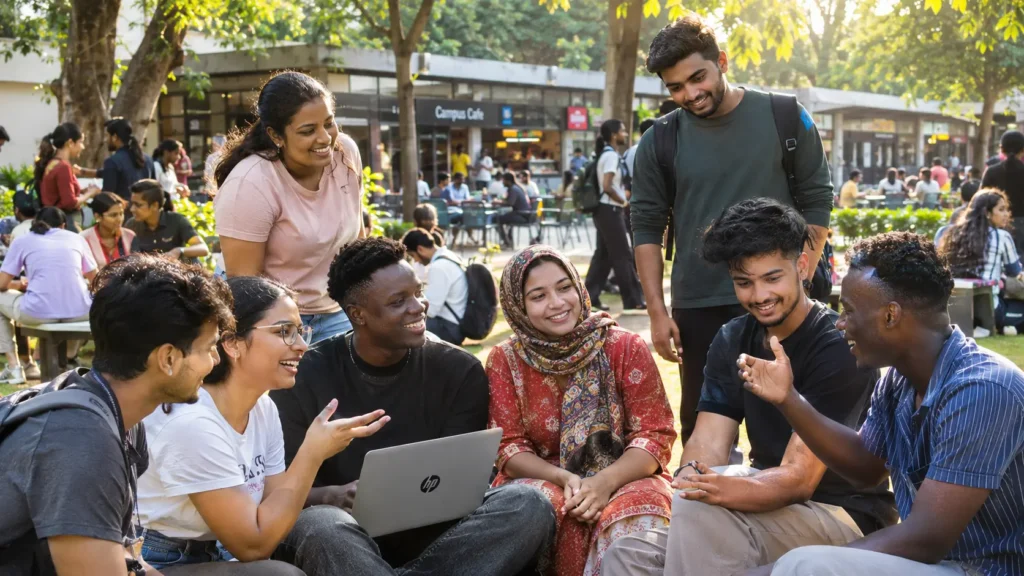
2.8 A Diverse Cultural and Student Experience
India is a country of diverse languages, cuisines, traditions and festivals.
Students can experience different regional cultures, historical destinations, traditional celebrations and modern urban lifestyles.
Indian cities also offer different living environments, from major metropolitan centres to smaller university towns.
International students should consider practical aspects such as food preferences, accommodation, climate, healthcare and access to student support when selecting a university.
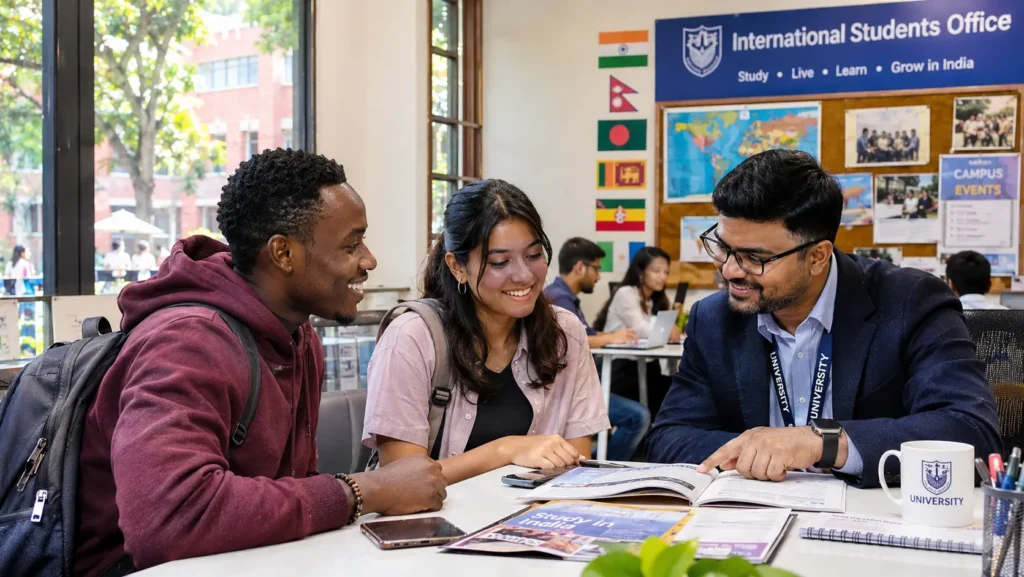
Many universities have international student offices or dedicated support arrangements to help students adjust to campus life.
3. Why Should African Students Consider Studying in India?
India has established educational and diplomatic relationships with several African nations, creating opportunities for academic cooperation and student mobility.
Students from Nigeria, Ghana, Kenya, Tanzania, Uganda, Rwanda, Ethiopia and Zimbabwe can explore Indian universities offering programmes across healthcare, engineering, technology, business and other disciplines.
Scholarship opportunities, particularly the India-Africa Maitri Scholarship Scheme, further strengthen the educational connection between India and African countries.
For African students considering India, some important factors include:
- Access to diverse academic programmes.
- Competitive education costs.
- English-medium courses at many institutions.
- Government-supported scholarship opportunities.
- Exposure to technology and emerging industries.
- Opportunities to interact with students from different countries.
Students should also prepare for cultural adjustment, differences in food, climate and everyday lifestyles. Checking accommodation arrangements, campus security and international student support before travelling is equally important.
Choosing a university that understands the needs of international students can make the transition considerably easier.
4. Why Should Students from SAARC Countries Choose India?
India’s geographical proximity and established educational relationships make it a relevant higher education destination for students from neighbouring South Asian countries.
Students from Nepal, Bangladesh, Bhutan, Sri Lanka and Maldives can explore academic opportunities in Indian institutions across a wide range of disciplines.
Some important considerations include:
- Nepal: Established educational links, proximity and scholarship opportunities.
- Bangladesh: Opportunities in engineering, healthcare, business and other disciplines, alongside the Suborno Jayanti Scholarship Scheme.
- Bhutan: Academic opportunities and the Dr. B.R. Ambedkar Scholarship Scheme.
- Sri Lanka: Higher education opportunities and the Aid to Sri Lanka Scholarship Scheme.
- Maldives: Access to specialised programmes and the Aid to Maldives Scholarship Scheme.
The availability of scholarships and admission pathways depends on nationality, academic qualifications, programme eligibility and the applicable scheme.
5. Best Indian Cities for International Students
Choosing the right city is an important part of choosing the right university.
India has several established education and technology centres, each offering a different academic and lifestyle environment.
| City | Known For |
|---|---|
| Bengaluru | IT, engineering, technology and startups |
| Pune | Universities, management, IT and automotive industries |
| Delhi NCR | Higher education, business and research |
| Hyderabad | IT, pharmaceuticals and biotechnology |
| Chennai | Engineering, medicine and manufacturing |
| Mumbai | Finance, commerce, business and media |
| Jaipur | Education, culture and hospitality |
Students should compare university quality, course availability, accommodation, transportation and living expenses before selecting a city.
6. Admission Requirements for International Students in India
The admission process depends on the university, course and level of education.
Generally, international applicants may need:
- Valid passport.
- Academic certificates and transcripts.
- Proof of previous educational qualifications.
- Passport-sized photographs.
- English proficiency documentation, where required.
- Course-specific entrance examination results, where applicable.
- Additional documents requested by the university.
Undergraduate applicants generally need qualifications equivalent to the required Indian Class 12 standard, while postgraduate applicants need a relevant bachelor’s degree.
Certain professional courses have additional eligibility and regulatory requirements.
Students should always check the university’s admission criteria before submitting an application.
7. How to Get a Student Visa to Study in India
After receiving admission to an eligible Indian educational institution, international students can apply for the appropriate Indian student visa.
The general process involves:
- Selecting a suitable university and course.
- Completing the university admission process.
- Receiving an official admission offer.
- Preparing the required visa documents.
- Applying through the appropriate Indian Embassy, High Commission or official visa process.
- Completing applicable registration formalities after arrival.
Documents generally include a valid passport, admission letter, photographs, academic information and evidence of financial support. Requirements may differ according to nationality and visa category.
Students should also check the applicable FRRO/E-FRRO registration requirements before travelling.
8. Is India Safe and Suitable for International Students?
Safety and student well-being are important considerations for students and their families.
India has universities with campus accommodation, student facilities, healthcare access and international student support arrangements. However, facilities and support differ between institutions.
Before choosing a university, students should investigate:
- Campus security and emergency support.
- University hostel facilities.
- Nearby hospitals and healthcare services.
- Transportation and accessibility.
- International student assistance.
- Food and accommodation options.
African students may also wish to check whether familiar food options, including halal and African cuisine, are available in their chosen city.
Preparing in advance and selecting an institution with appropriate student support can help students adjust to their new environment.
9. Can International Students Work in India After Graduation?
Studying in India can provide academic knowledge, professional skills and exposure to a developing economy.
However, international students should understand that completing a degree does not automatically grant permission to work in India.
Employment after graduation is subject to applicable immigration regulations, visa eligibility and employer requirements.
Students who plan to return to their home countries should also verify whether their Indian qualification meets the professional recognition and licensing requirements there.
For example, medical graduates must check the relevant medical regulatory requirements before planning to practise in their home country.
10. How Tensor International Helps International Students Study in India
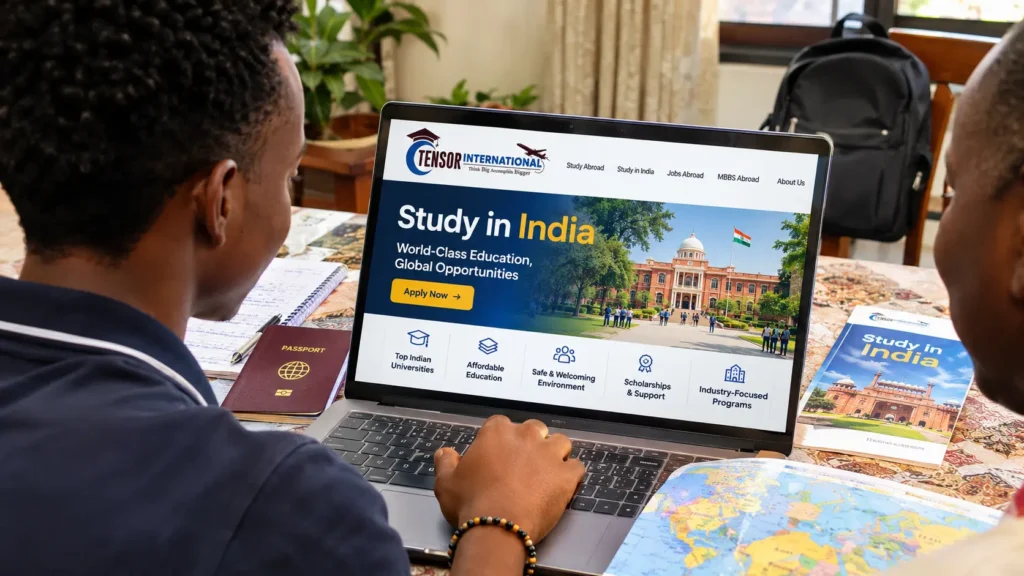
Choosing a university in another country involves several important decisions. Students need reliable information about courses, university recognition, admission eligibility, fees, scholarships and visa procedures.
Tensor International aims to simplify this journey by helping international students explore suitable higher education opportunities in India.
Our guidance can help students with:
- Course Selection: Exploring programmes according to academic qualifications and career interests.
- University Shortlisting: Identifying suitable institutions based on course availability, recognition, location and budget.
- Admission Assistance: Understanding eligibility, application procedures and documentation.
- Scholarship Guidance: Exploring relevant scholarship opportunities and eligibility requirements.
- Visa Guidance: Understanding the student visa process and required documentation.
- Pre-Departure Guidance: Preparing for accommodation, travel and student life in India.
Our objective is to help students make informed education decisions and navigate their journey towards studying in India.
Frequently Asked Questions About Studying in India
Can international students study in India?
Yes. International students can apply to eligible Indian universities and educational institutions for undergraduate, postgraduate and doctoral programmes, subject to admission and visa requirements.
Is India affordable for international students?
India offers universities with different tuition fee structures and living arrangements. Students can compare institutions and cities to find options that suit their budgets.
Are there scholarships for African students in India?
Yes. The ICCR offers the India-Africa Maitri Scholarship Scheme for eligible African students. The scholarship covers specified academic expenses and allowances according to its applicable guidelines.
Can students from Nepal and Bangladesh study in India?
Yes. Students from Nepal and Bangladesh can explore undergraduate and postgraduate opportunities at eligible Indian institutions, subject to university admission requirements and applicable immigration rules.
Do international students need IELTS to study in India?
Not necessarily. English language requirements vary between universities and programmes. Some institutions may accept alternative proof of English proficiency or have their own assessment procedures.
Are Indian university degrees recognised internationally?
Recognition depends on the institution, qualification, course and regulations of the country where the graduate intends to use the degree. Students should verify recognition requirements before enrolling.
Can international students work while studying in India?
Students should not assume that their student visa permits employment. They must check the applicable visa conditions and Indian immigration regulations before undertaking any work.
Conclusion: Begin Your Higher Education Journey in India
India offers international students a combination of diverse academic programmes, competitive education costs, English-medium learning opportunities, scholarship schemes and exposure to a developing economy.
For students from Africa and SAARC countries, it is a destination worth exploring when comparing international higher education opportunities.
However, choosing the right institution requires careful research. University recognition, programme eligibility, total expenses, accommodation and future career plans should all be considered before making a decision.
With the right information and guidance, students can make more confident choices about their academic future.
Planning to study in India?
Tensor International can help you explore suitable courses, universities, admission opportunities and scholarship options according to your academic background and aspirations.
Start your journey towards higher education in India with Tensor International.
Visit Tensor International to explore your opportunities and connect with our team.