
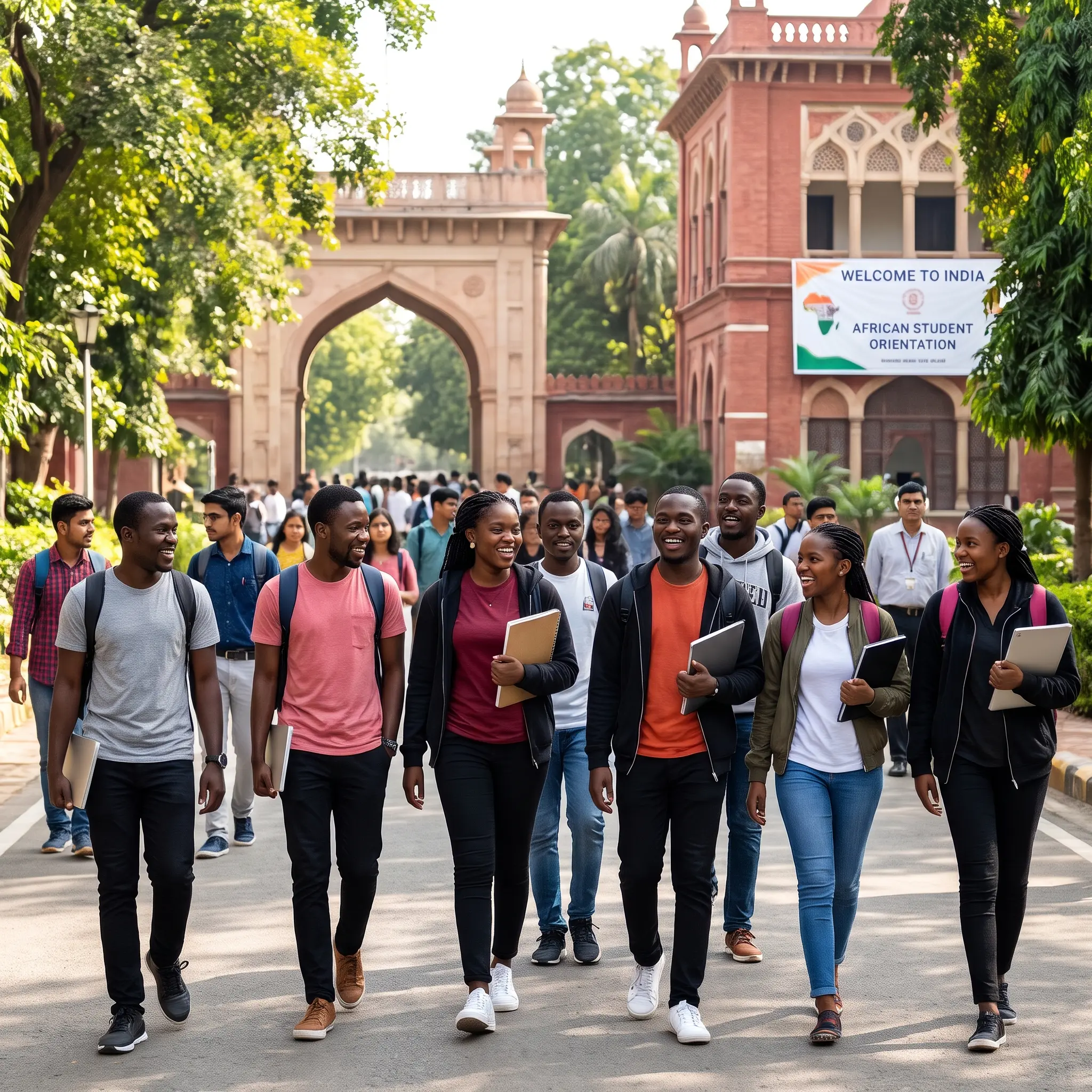
Study in India for African Students: Courses, Scholarships, Fees and Admission Guide
For many students across Africa, studying abroad is an opportunity to gain an internationally recognised qualification, develop new skills and build a stronger future. But choosing the right country is not always easy. Tuition fees, living expenses, university recognition, scholarships, visa requirements and career opportunities all play an important role.
India is becoming an increasingly interesting destination for African students exploring higher education opportunities overseas. With universities offering programmes across engineering, medicine, information technology, business, agriculture, science and other disciplines, India provides a wide range of academic choices.
Its growing technology, pharmaceutical, manufacturing and business sectors also offer students exposure to a diverse professional environment.
But is India the right destination for you? How much does it cost to study there? Can African students receive scholarships? What qualifications are required?
This guide from Tensor International explains what African students should know before choosing India for higher education.
Students seeking a deeper understanding of Indian universities, scholarships, student visas, living costs, and academic opportunities can also explore our comprehensive Study in India – Ultimate Guide for International Students, which provides detailed insights for international applicants planning their education journey in India.
Why Are African Students Considering India for Higher Education?
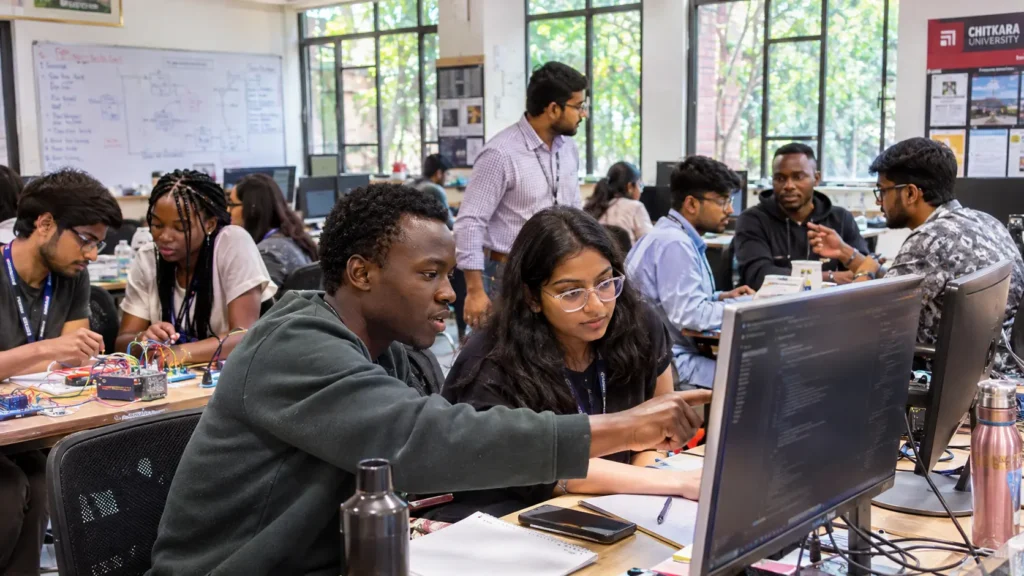
India offers several factors that make it worth considering when comparing international study destinations.
1. Diverse academic opportunities
Indian universities offer undergraduate, postgraduate and doctoral programmes across a wide range of subjects. Students can explore engineering, computer science, business administration, healthcare, agriculture, biotechnology, hospitality and many other disciplines.
2. Competitive education costs
Compared with some traditional international study destinations, India can offer competitive tuition and living costs. However, expenses vary considerably between universities, courses and cities. Students should compare the complete cost of studying rather than tuition fees alone.
3. English-medium programmes
Many Indian universities offer programmes taught in English, particularly in professional and postgraduate disciplines. However, the language of instruction should always be confirmed for the specific course before applying.
4. Exposure to growing industries
India has established industries in information technology, pharmaceuticals, engineering, manufacturing, financial services and entrepreneurship. Studying in this environment can help students understand different industries and develop professional perspectives.
5. Scholarship opportunities
Eligible African students can explore Indian government scholarship programmes, including the India-Africa Maitri Scholarship Scheme administered through the Indian Council for Cultural Relations (ICCR).
6. A multicultural learning environment
Students studying in India can interact with classmates from different Indian states and international backgrounds. This experience can help them develop communication skills, cultural awareness and international connections.
What Can African Students Study in India?
India offers academic opportunities across a wide range of disciplines. The right programme depends on a student’s previous qualifications, career interests and long-term plans.
| Study area | Popular programme options |
|---|---|
| Engineering | Mechanical, civil, electrical and electronics engineering |
| Computer Science and IT | Computer science, artificial intelligence, data science and cybersecurity |
| Business and Management | BBA, MBA, finance, marketing and international business |
| Healthcare | Nursing, pharmacy, biotechnology and public health |
| Medicine | MBBS and other medical programmes, subject to eligibility and recognition requirements |
| Agriculture | Agricultural science, food technology and agribusiness |
| Science | Chemistry, physics, environmental science and biotechnology |
| Hospitality | Hotel management, tourism and hospitality |
| Humanities | Economics, social sciences and international relations |
Students interested in MBBS or other regulated healthcare professions should take additional care. Before accepting admission, check Indian regulatory requirements and whether the qualification will meet the medical or professional licensing rules in your home country.
Which Indian Universities Should African Students Consider?
India has different types of higher education institutions, including central universities, state universities, private universities, deemed-to-be universities and Institutes of National Importance.
Rather than choosing a university only because it appears in an advertisement or offers an attractive scholarship, students should evaluate the institution carefully.
Consider these points before applying:
- Recognition: Verify the university’s legal recognition and relevant regulatory status.
- Programme quality: Check the curriculum, teaching methods, faculty and facilities.
- Accreditation: Investigate applicable institutional and programme-level accreditation.
- Language: Confirm that the course is taught in a language you understand.
- Fees: Obtain a complete written fee structure, including additional charges.
- Accommodation: Check whether international students can access university hostels.
- Student support: Look for international student offices, orientation and grievance procedures.
- Degree recognition: Confirm whether the qualification will be accepted in your intended country of employment or further study.
The University Grants Commission (UGC), National Assessment and Accreditation Council (NAAC) and National Institutional Ranking Framework (NIRF) provide different types of institutional information. They are not interchangeable, so understand what each recognition, accreditation or ranking actually means.
Scholarships in India for African Students
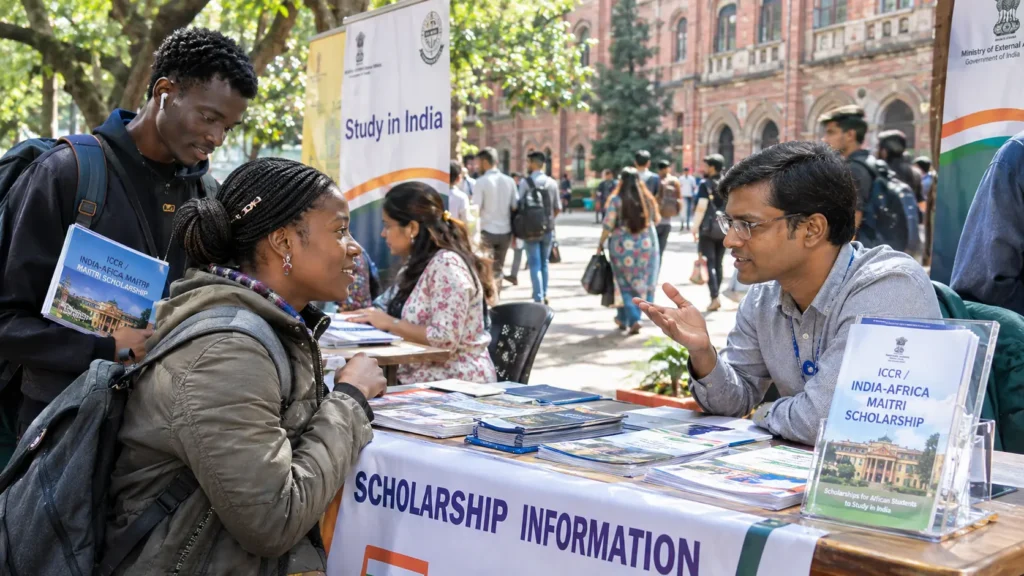
Scholarships can make international education more accessible, particularly for students who need financial assistance.
One important opportunity is the India-Africa Maitri Scholarship Scheme, administered by ICCR.
The 2026–27 ICCR programme lists 1,513 scholarship slots under this scheme across 54 African countries. The programme includes undergraduate, postgraduate and PhD opportunities in STEM and non-STEM disciplines, subject to the applicable conditions.
What can the ICCR scholarship cover?
Depending on the scheme and applicable university norms, benefits may include:
- Prescribed tuition or academic fees.
- Monthly stipend.
- House Rent Allowance (HRA).
- Contingency allowance.
- Thesis or dissertation allowance, where applicable.
- Return economy airfare.
However, students should not assume that every expense is covered.
Hostel or private accommodation charges, mess expenses, security deposits, registration or immigration fees and other costs may remain the student’s responsibility.
The listed India-Africa Maitri scheme also excludes certain programmes, including medical, law and integrated courses. Always check the current eligibility rules before applying.
Are there other scholarships?
African students can also investigate:
- Other ICCR scholarship schemes.
- University-specific merit scholarships.
- Institutional tuition fee waivers.
- Country-specific opportunities announced by Indian diplomatic missions.
- Eligible online education programmes offered through India-Africa initiatives.
An important distinction: registering on the Study in India portal does not automatically provide an ICCR scholarship. Admission, scholarship selection and university-funded financial assistance are separate processes.
Visit the official ICCR scholarship page for current schemes, deadlines and eligibility conditions.
How Much Does It Cost to Study in India for African Students?
The total cost depends on the university, course, city and lifestyle. A student attending a public university in one city may have very different expenses from someone enrolled at a private institution in a major metropolitan area.
Before applying, prepare a budget covering:
| Expense | What to consider |
|---|---|
| Tuition fees | Annual or semester-based programme fees |
| Accommodation | University hostel or private rental |
| Food | Hostel meals, groceries and personal food preferences |
| Transportation | Public transport and local travel |
| Study materials | Books, equipment and academic supplies |
| Healthcare | Medical expenses and applicable insurance |
| Travel | Flights and initial settlement costs |
| Administration | Visa, registration and other applicable charges |
| Personal expenses | Communication, clothing and emergency funds |
Ask Tensor International counsellor for their complete fee structure rather than relying on estimates found online.
Students should also maintain sufficient funds for unexpected expenses. A scholarship may reduce the financial burden, but it is important to understand exactly which costs it covers.
For a detailed breakdown, see our forthcoming guide to the cost of studying in India for African students.
Admission Requirements for African Students
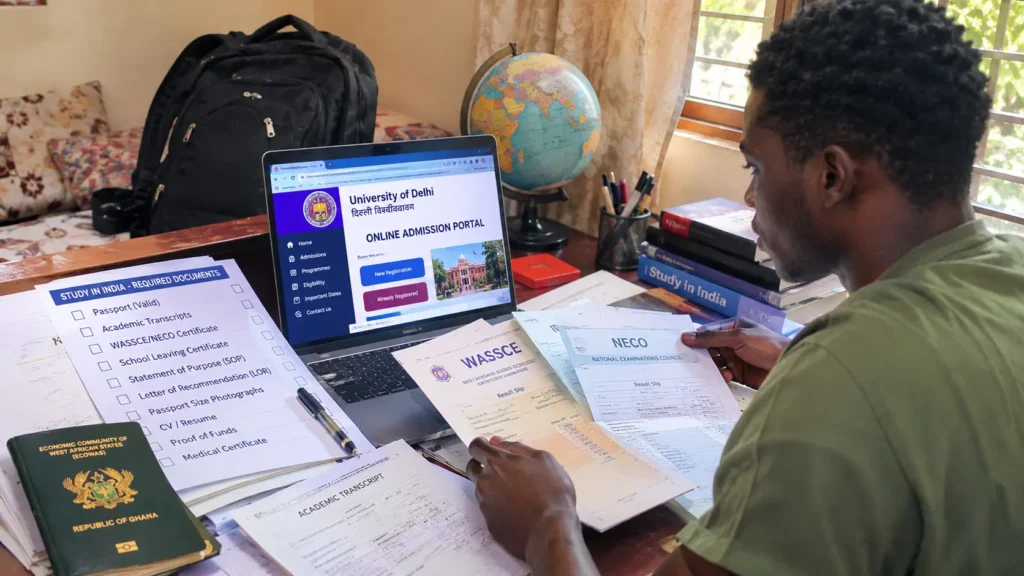
Admission requirements vary according to the university, academic level and chosen programme.
Undergraduate admission
Students generally need a recognised secondary school qualification equivalent to the relevant Indian Class 12 requirement. Subject combinations and minimum marks may differ depending on the course.
Postgraduate admission
Applicants normally need a recognised bachelor’s degree in an appropriate subject. Certain programmes may require entrance examinations, additional academic prerequisites or relevant experience.
Country-specific qualifications
African students may apply with different national qualifications, including:
- WASSCE or NECO from Nigeria.
- WASSCE from Ghana.
- KCSE from Kenya.
- CSEE or ACSEE from Tanzania.
- UCE or UACE from Uganda.
- ZIMSEC qualifications from Zimbabwe.
- Other recognised national secondary or higher education qualifications.
Acceptance and equivalence are determined by the relevant university and applicable authorities. Holding one of these qualifications does not automatically guarantee admission.
Common documents required
Students may be asked to provide:
- Valid passport.
- Academic certificates.
- Academic transcripts or mark sheets.
- Passport-sized photographs.
- Completed application form.
- English-language proficiency evidence, where required.
- Course-specific documents.
- Additional verification or equivalence documents, if requested.
Do not assume that IELTS or TOEFL is compulsory for every Indian university. Language requirements differ by institution and programme, so confirm them before applying.
How Can African Students Apply to Indian Universities?
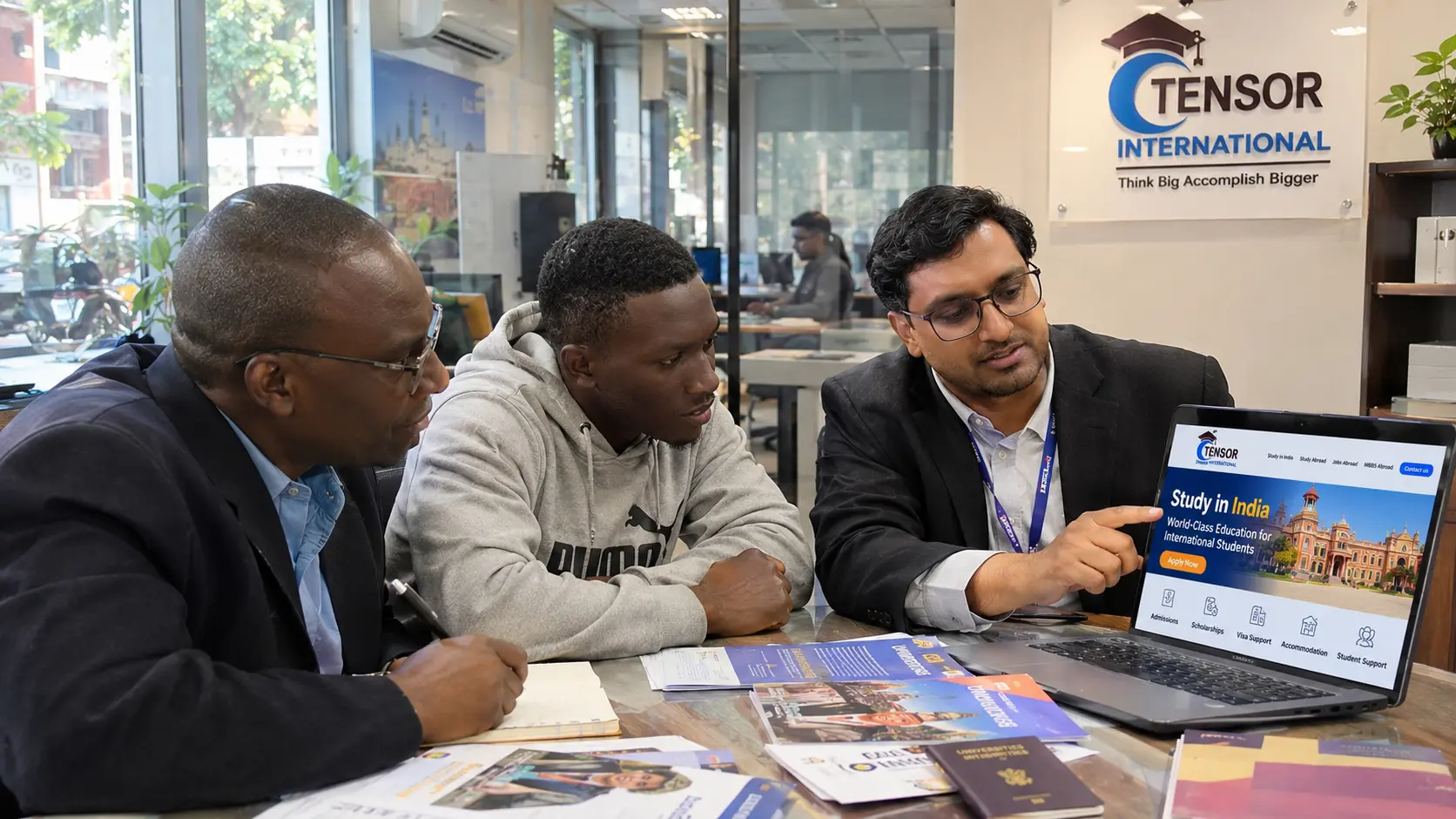
The application process becomes easier when students follow a clear sequence.
Step 1: Select your course
Identify your preferred academic subject and decide whether you want to pursue undergraduate, postgraduate or doctoral study.
Step 2: Research universities
Compare recognised institutions offering your chosen programme. Check fees, eligibility, language of instruction and accommodation.
Step 3: Check academic eligibility
Confirm whether your African qualification meets the university’s requirements. Ask the expert counsellor from Tensor International about any additional documents or verification.
Step 4: Prepare your documents
Arrange your academic certificates, transcripts, passport and other requested documents.
Step 5: Submit applications
Apply through the Tensor International and clarify all your doubts.
Step 6: Evaluate your admission offer
Review the course, fees, payment conditions, accommodation options and refund policy before accepting.
Step 7: Arrange your student visa
Once you have the appropriate admission documentation, follow the Indian visa application process applicable to your country.
Indian Student Visa Requirements for African Students
African students travelling to India for regular full-time academic study generally need the appropriate Indian Student Visa.
The process normally involves:
- Receiving an admission offer from an eligible institution.
- Preparing a valid passport and required application documents.
- Providing the university admission details.
- Submitting financial evidence where required.
- Completing the relevant visa application procedure.
- Following any additional requirements issued by the Indian Embassy or High Commission in your country.
Visa requirements, fees and processing times can differ between countries. Students should consult the relevant Indian diplomatic mission rather than relying on a generic checklist.
What happens after arriving in India?
Some foreign students holding visas valid for more than 180 days are required to register with the Foreigners Regional Registration Office (FRRO) within 14 days of arrival, subject to applicable conditions and exemptions.
Students should follow the conditions printed on their visa and the latest official immigration instructions.
Life in India for African Students

Moving to another country involves more than attending lectures. Students also need to adjust to a different culture, food, climate, transport system and lifestyle.
Accommodation
Some universities provide hostel accommodation for international students, while others may require students to arrange private housing. Confirm availability, charges, security, distance from campus and meal arrangements before travelling.
Food
India has diverse food traditions, and availability varies between cities. Students can explore vegetarian and non-vegetarian meals, international restaurants and, depending on location, African food and halal options.
If you have particular dietary requirements, research them before choosing a university and accommodation.
Language and cultural adjustment
English is widely used in many higher education settings, but local languages are common in everyday life. Learning a few basic local expressions can make daily interactions easier.
University orientation programmes, student associations and international student communities can also help newcomers settle in.
Healthcare and student support
Before travelling, understand how to access medical facilities, whether health insurance is required and whom to contact during an emergency. Ask the university about international student support and grievance procedures.
Is India Safe for African Students?
Safety is an important concern for students and their families. India has many university environments and residential areas, but experiences and facilities differ between institutions and cities.
Before choosing a university, investigate:
- Campus security and hostel arrangements.
- Safety of the surrounding neighbourhood.
- Local transport and emergency arrangements.
- University grievance and student-support systems.
- Healthcare access.
- Procedures for reporting harassment or discrimination.
African students should also know how to contact university authorities and local emergency services.
Cultural adjustment and discrimination concerns should not be ignored. Researching the university’s student welfare arrangements and speaking with current international students can help families make more informed decisions.
Can African Students Work in India After Graduation?
Students should understand the difference between studying in India, undertaking permitted academic activities and obtaining employment.
A Student Visa does not automatically provide permission to work in India after graduation. Employment is subject to applicable immigration rules and the relevant work authorisation.
Students should also consider their career plans in their home countries. Before enrolling in a professional programme, check whether the qualification meets the requirements of the relevant professional regulator or employer.
An Indian degree may support future career development, but employment and professional recognition are never automatic guarantees.
Frequently Asked Questions
Can African students study in India?
Yes. Eligible students from African countries can apply to participating Indian universities, provided they meet the academic, course-specific and admission requirements.
Can African students get scholarships in India?
Yes. Eligible applicants can explore ICCR scholarships, including the India-Africa Maitri Scholarship Scheme, as well as university-specific financial assistance.
Is the India-Africa Maitri Scholarship fully funded?
Its benefits can include prescribed academic fees, stipends and other allowances, but certain accommodation, food and administrative expenses may remain the student’s responsibility.
Can Nigerian students study in India?
Yes. Nigerian students can apply to eligible Indian universities using their academic qualifications, subject to the selected institution’s admission requirements.
Do African students need IELTS to study in India?
Not necessarily. English-language requirements vary between universities and programmes. Applicants should confirm the exact requirement with their chosen institution.
Is India affordable for African students?
India can offer competitive study and living costs compared with several international destinations. However, the actual budget depends on the university, course, city and accommodation.
Is India safe for international students?
Safety varies by location and institution. Students should evaluate campus security, accommodation, local transport and international student support before accepting admission.
Are Indian degrees recognised in African countries?
Recognition depends on the qualification, institution and home-country rules. Students should verify the relevant national and professional recognition requirements before enrolling.
Begin Your Study Journey in India with Tensor International
Choosing a university in another country is a major decision for students and their families. The right choice involves more than finding an available course. It requires understanding academic eligibility, institutional recognition, financial commitments, scholarship conditions and the student visa process.
Tensor International aims to help international students explore higher education opportunities in India and make more informed decisions about their academic journey.
Whether you are completing secondary education in Nigeria, considering postgraduate study in Ghana, exploring engineering programmes from Kenya or researching scholarship opportunities from another African country, take time to evaluate your options carefully.
Explore your study opportunities in India with Tensor International. Make an informed choice about your education and take the next step towards your academic future.