

Everything You Need to Know About Studying Abroad – Countries, Costs, Scholarships, Admissions, Visas, and Career Opportunities
For many students, studying abroad is more than just earning a degree from an international university. It is an opportunity to gain world-class education, develop global skills, build an international network, and create career opportunities that may not be available locally.
Today, thousands of Indian students choose overseas education every year to pursue undergraduate degrees, master’s programs, MBAs, MBBS programs, diplomas, and research opportunities in countries such as the United States, United Kingdom, Canada, Australia, Germany, Ireland, New Zealand, and many others.
However, the study abroad journey can seem overwhelming. Students often have questions such as:
- Which country is best for studying abroad?
- How much does studying abroad cost?
- Can I get a scholarship?
- Which exams are required?
- How do I apply to foreign universities?
- What is the student visa process?
- Can I work while studying abroad?
- Which course offers the best career opportunities?
The answers depend on your academic background, career goals, budget, preferred destination, and long-term aspirations. Students often need expert guidance to compare countries, universities, scholarships, and career opportunities before making important decisions.
At Tensor International, we believe that informed students make better decisions. This guide has been created to provide practical, accurate, and up-to-date information about international education, helping students understand every stage of the study abroad process.
Whether you are planning to study abroad after 12th, pursue a master’s degree overseas, apply for MBBS abroad, or explore scholarship opportunities, this comprehensive guide will help you navigate your options confidently.
What Does Study Abroad Mean?
Study abroad refers to pursuing education in a country other than your home country.
Students can choose from various levels of education, including:
- Undergraduate degrees
- Postgraduate degrees
- MBA programs
- MBBS and medical education
- Diploma and certificate courses
- Research programs
- Exchange programs
- Language programs
For Indian students, studying abroad often means enrolling in universities located in countries such as the USA, UK, Canada, Australia, Germany, Ireland, New Zealand, France, Russia, and other emerging education destinations.
The study abroad experience goes beyond academics. Students gain exposure to different cultures, educational systems, teaching methodologies, and professional environments.
International education also helps students develop important life skills such as independence, adaptability, problem-solving, communication, and cross-cultural understanding.
As globalization continues to reshape industries and workplaces, employers increasingly value graduates with international experience and global perspectives.
Why Study Abroad?

One of the most common questions students ask is whether studying abroad is worth the investment.
The answer depends on your goals, but for many students, overseas education provides opportunities that can significantly impact their personal and professional growth.
Studying abroad can help students gain international exposure, develop industry-relevant skills, and access global career opportunities.
Access to World-Class Universities
Many of the world’s leading universities are located in countries that actively welcome international students.
These institutions often offer:
- Advanced research facilities
- Industry-focused curricula
- Experienced faculty
- Global academic collaborations
- Strong employer connections
Students gain access to educational resources that help them build expertise in their chosen fields.
Global Career Opportunities
One of the biggest advantages of international education is improved employability.
Many multinational companies actively recruit graduates from internationally recognized universities because they value:
- Global exposure
- Cultural adaptability
- Communication skills
- Independent thinking
- International perspectives
Students who study abroad often gain access to internships, industry projects, and networking opportunities that support long-term career growth.
International Exposure and Cultural Understanding
Living in another country allows students to interact with people from different cultures, backgrounds, and perspectives.
This experience develops:
- Cross-cultural communication
- Global awareness
- Interpersonal skills
- Adaptability
These qualities are increasingly important in today’s interconnected global economy.
Better Research Opportunities
Students interested in research, innovation, and advanced academic studies often benefit from access to:
- State-of-the-art laboratories
- International research collaborations
- Specialized faculty
- Funding opportunities
Countries such as the USA, UK, Germany, and Canada are particularly known for research-intensive educational environments.
Enhanced Language and Communication Skills
Studying abroad helps students improve their communication abilities in professional and academic settings.
Even students studying in English-speaking countries develop stronger:
- Academic writing skills
- Presentation skills
- Public speaking confidence
- Professional communication abilities
These skills can significantly improve career prospects.
Personal Growth and Independence
Beyond academics, studying abroad teaches students how to:
- Manage finances
- Handle responsibilities
- Solve problems independently
- Adapt to new environments
Many students describe this personal growth as one of the most valuable outcomes of their international education journey.
Is Studying Abroad Worth It?
This is one of the most searched questions among prospective international students.
The value of studying abroad depends on several factors:
Your Career Goals
A degree from a globally recognized institution can create opportunities in international job markets.
Your Course Selection
Some fields such as Data Science, Artificial Intelligence, Engineering, Business Analytics, Healthcare, and Finance may offer strong international career prospects.
Your Return on Investment (ROI)
Students should evaluate:
- Tuition fees
- Living expenses
- Scholarship opportunities
- Post-study work options
- Expected salary outcomes
Your Long-Term Objectives
Some students pursue international education for career advancement, while others seek research opportunities, entrepreneurship pathways, or global professional experience.
A successful study abroad plan focuses on outcomes rather than simply choosing a popular destination.
Best Countries to Study Abroad for Indian Students
Choosing the right country is one of the most important decisions in the study abroad process.
Each destination offers unique advantages, educational systems, career opportunities, and immigration policies.
The best country for one student may not be the best choice for another.
The following comparison can help students understand their options.
| Country | Popular Courses | Post-Study Opportunities |
|---|---|---|
| USA | STEM, MBA, Computer Science | OPT and career pathways |
| UK | Business, Finance, Law | Graduate Route |
| Canada | Engineering, Healthcare, IT | PGWP opportunities |
| Australia | Nursing, Engineering, Business | Post-study work rights |
| Germany | Engineering, Automotive | Job seeker pathways |
| Ireland | Technology, Data Science | Growing tech sector |
| New Zealand | Hospitality, Agriculture | Work opportunities |
| France | Business, Fashion, Hospitality | International career options |
Study in USA
The United States remains one of the most popular destinations for international students.
Why Choose USA?
- Globally recognized universities
- Extensive research opportunities
- Diverse course offerings
- Strong technology ecosystem
- Flexible education system
Popular courses include:
- Computer Science
- Artificial Intelligence
- Data Science
- Engineering
- Business Administration
- Finance
- Healthcare
Students can also benefit from Optional Practical Training (OPT), which allows eligible graduates to gain work experience after completing their studies.
The USA is particularly attractive for students seeking innovation-driven careers and research opportunities.
Study in UK
The United Kingdom is known for its prestigious universities and shorter degree durations.
Advantages of Studying in UK
- Globally respected qualifications
- One-year master’s programs
- Strong academic reputation
- Diverse student population
- Graduate Route work opportunities
Popular fields include:
- Business Management
- Finance
- Law
- Marketing
- Engineering
- Healthcare
The shorter duration of many postgraduate programs can reduce overall educational costs compared to some other destinations.
Study in Canada
Canada continues to attract international students because of its quality education system, welcoming environment, and post-study work opportunities.
Why Students Choose Canada
- High-quality education
- Affordable tuition compared to some destinations
- Multicultural society
- Strong immigration pathways
- Safe environment
Popular programs include:
- Engineering
- Information Technology
- Healthcare
- Business
- Artificial Intelligence
- Environmental Sciences
Canada’s Post-Graduation Work Permit (PGWP) program makes it a popular destination for students interested in gaining international work experience.
Study in Australia
Australia combines strong academic institutions with a high quality of life.
Benefits of Studying in Australia
- Globally recognized universities
- Strong employment opportunities
- Practical learning approaches
- Multicultural communities
- Post-study work options
Popular fields include:
- Nursing
- Public Health
- Engineering
- Information Technology
- Business Management
- Hospitality
Australia remains a preferred destination for students seeking career-focused education and international exposure.
Study in Germany
Germany has become increasingly popular among international students, particularly those interested in engineering and technology.
Why Study in Germany?
- Strong engineering reputation
- Research-focused universities
- Industry connections
- High-quality education
- Relatively affordable public university options
Popular courses include:
- Mechanical Engineering
- Automotive Engineering
- Computer Science
- Robotics
- Renewable Energy
Germany is often considered by students seeking a balance between quality education and cost-effectiveness.
Study in Ireland
Ireland has emerged as one of Europe’s fastest-growing study destinations.
Advantages of Ireland
- Strong technology sector
- English-speaking environment
- Growing demand for skilled professionals
- International business opportunities
Popular courses include:
- Data Analytics
- Cybersecurity
- Software Development
- Business Analytics
- Pharmaceutical Sciences
Many global technology companies maintain significant operations in Ireland, creating attractive opportunities for graduates.
Which Country Is Best for Study Abroad?
There is no universal answer.
The best study abroad destination depends on:
- Academic goals
- Budget
- Career objectives
- Preferred course
- Scholarship opportunities
- Immigration preferences
- Language requirements
Students should evaluate destinations based on their personal circumstances rather than rankings alone.
A strategic decision often produces better long-term outcomes than simply choosing the most popular country.
In the next section, we will explore how to choose the right country, the most popular courses to study abroad, eligibility requirements, admission processes, scholarships, costs, student visas, and everything else students need to successfully plan their international education journey.
How to Choose the Right Country for Study Abroad

One of the biggest mistakes students make is selecting a destination based solely on popularity, social media trends, or recommendations from friends.
The right study abroad destination should align with your academic goals, career aspirations, financial situation, and long-term plans.
Before choosing a country, consider the following factors.
Budget and Cost of Education
The total cost of studying abroad includes:
- Tuition fees
- Accommodation
- Food and living expenses
- Health insurance
- Transportation
- Visa fees
- Miscellaneous expenses
Some countries may have higher tuition fees but offer stronger scholarship opportunities, while others provide lower-cost education but fewer funding options.
Students should evaluate the total cost of attendance rather than tuition fees alone.
Career Opportunities After Graduation
Many students choose international education to improve their employment prospects.
When comparing destinations, research:
- Graduate employability rates
- Industry demand
- Internship opportunities
- Post-study work visas
- Average salaries
Countries with strong demand in your chosen field may provide better long-term returns on investment.
Scholarship Availability
Scholarships can significantly reduce the financial burden of overseas education.
Before selecting a destination, investigate:
- University scholarships
- Government-funded scholarships
- Merit-based funding
- Need-based assistance
- Research grants
Students interested in studying abroad with scholarships should prioritize institutions known for supporting international students.
Immigration and Post-Study Work Opportunities
Many students consider future employment opportunities when selecting a destination.
Research:
- Post-study work rights
- Skilled migration pathways
- Graduate visa programs
- Employment regulations
Policies change periodically, so students should always verify current immigration requirements through official government sources.
Language Requirements
Although many international programs are taught in English, language requirements vary.
Common English proficiency tests include:
- IELTS
- TOEFL
- PTE Academic
- Duolingo English Test
Some countries may also offer programs in their native language.
Quality of Life and Student Experience
Important considerations include:
- Safety
- Healthcare access
- Climate
- Public transportation
- Cultural environment
- Student support services
The best study abroad experience combines academic success with personal well-being.
Most Popular Courses to Study Abroad
Course selection is one of the most important decisions students make.
A well-chosen course should align with:
- Career goals
- Industry demand
- Personal interests
- Future employment opportunities
Below are some of the most popular study abroad programs among international students.
| Course | Popular Destinations |
|---|---|
| Computer Science | USA, Canada, Ireland |
| Artificial Intelligence | USA, UK, Canada |
| Data Science | USA, Ireland, Australia |
| Engineering | Germany, USA, Canada |
| Business Management | UK, USA, Australia |
| MBA | USA, UK, Canada |
| Finance | UK, USA, Singapore |
| Healthcare | Australia, Canada, UK |
| Nursing | Australia, Canada |
| MBBS | Russia, Georgia, Kazakhstan |
| Cybersecurity | Ireland, USA |
| Hospitality Management | Switzerland, Australia |
Study Abroad for Computer Science and IT
Technology continues to be one of the fastest-growing global sectors.
Popular specializations include:
- Software Engineering
- Artificial Intelligence
- Machine Learning
- Cybersecurity
- Cloud Computing
- Data Analytics
Countries such as the USA, Canada, Ireland, and Australia offer strong technology ecosystems and employment opportunities.
Study Abroad for Engineering
Engineering remains one of the most sought-after international education pathways.
Popular disciplines include:
- Mechanical Engineering
- Civil Engineering
- Electrical Engineering
- Aerospace Engineering
- Robotics
- Automotive Engineering
Germany, USA, Canada, and Australia are among the preferred destinations for engineering students.
Study Abroad for Business and Management
Business programs continue to attract students seeking leadership and management careers.
Popular specializations include:
- International Business
- Marketing
- Human Resource Management
- Finance
- Supply Chain Management
- Entrepreneurship
The UK, USA, Canada, and Australia remain popular destinations for business education.
Study Abroad for Healthcare and Nursing
Healthcare professionals remain in high demand globally.
Students frequently pursue:
- Nursing
- Public Health
- Healthcare Management
- Allied Health Sciences
Countries such as Australia, Canada, and the UK offer strong healthcare education pathways.
Study Abroad Eligibility Criteria
Every university has its own admission requirements.
However, most institutions evaluate several common factors.
Academic Qualifications
Students must meet minimum academic requirements based on their chosen program.
Undergraduate Programs
Generally require:
- Completion of Class 12
- Academic transcripts
- Minimum percentage requirements
Master’s Programs
Typically require:
- Bachelor’s degree
- Academic transcripts
- Relevant academic background
MBA Programs
Often require:
- Bachelor’s degree
- Professional experience
- Strong academic profile
Eligibility requirements vary by institution and country.
English Language Proficiency Requirements

Most international universities require proof of English proficiency.
IELTS
The International English Language Testing System (IELTS) is one of the most widely accepted exams for study abroad admissions.
Many universities accept scores ranging from 6.0 to 7.5 depending on the program.
TOEFL
The Test of English as a Foreign Language (TOEFL) is accepted by universities worldwide.
It evaluates:
- Reading
- Writing
- Listening
- Speaking
PTE Academic
PTE Academic is increasingly accepted by universities and visa authorities.
Many students prefer PTE because of its computer-based format and faster results.
Duolingo English Test
Some institutions now accept the Duolingo English Test as an alternative to traditional language exams.
Students should verify acceptance policies directly with universities.
Standardized Tests for Study Abroad
Certain programs may require additional exams.
Examples include:
GRE
Often required for selected master’s programs.
GMAT
Commonly required for MBA programs.
SAT
May be required for undergraduate admissions at some institutions.
Students should check program-specific requirements before applying.
Documents Required for Study Abroad Applications

Preparing documents early can simplify the admission process.
Common requirements include:
✅ Academic transcripts
✅ Passport
✅ English language test scores
✅ Resume or CV
✅ Statement of Purpose (SOP)
✅ Letters of Recommendation (LOR)
✅ Financial documents
✅ Portfolio (for creative programs)
✅ Research proposal (for research-focused programs)
Missing documentation can delay or jeopardize applications.
What Is a Statement of Purpose (SOP)?
The Statement of Purpose is one of the most important documents in the study abroad admission process.
An SOP allows students to explain:
- Academic background
- Career goals
- Motivation for choosing a course
- Reasons for selecting a university
- Future aspirations
A strong SOP can significantly improve admission outcomes.
Tips for Writing a Strong SOP
Be Genuine
Universities value authenticity.
Explain Your Goals Clearly
Connect your academic interests with long-term career objectives.
Demonstrate Research
Show that you understand the university and program.
Highlight Relevant Experience
Discuss internships, projects, research, leadership, and achievements.
Maintain Professional Writing
Use clear, concise language and avoid exaggeration.
What Are Letters of Recommendation (LOR)?
Letters of Recommendation provide third-party validation of your abilities.
Universities often request recommendations from:
- Professors
- Academic mentors
- Employers
- Supervisors
Strong recommendations help admissions committees assess your potential for academic success.
How to Choose the Right Recommender
Choose individuals who:
- Know you well
- Can discuss your strengths
- Have observed your academic or professional work
- Can provide specific examples
Generic recommendations are less effective than detailed, personalized endorsements.
How to Apply for Study Abroad Programs
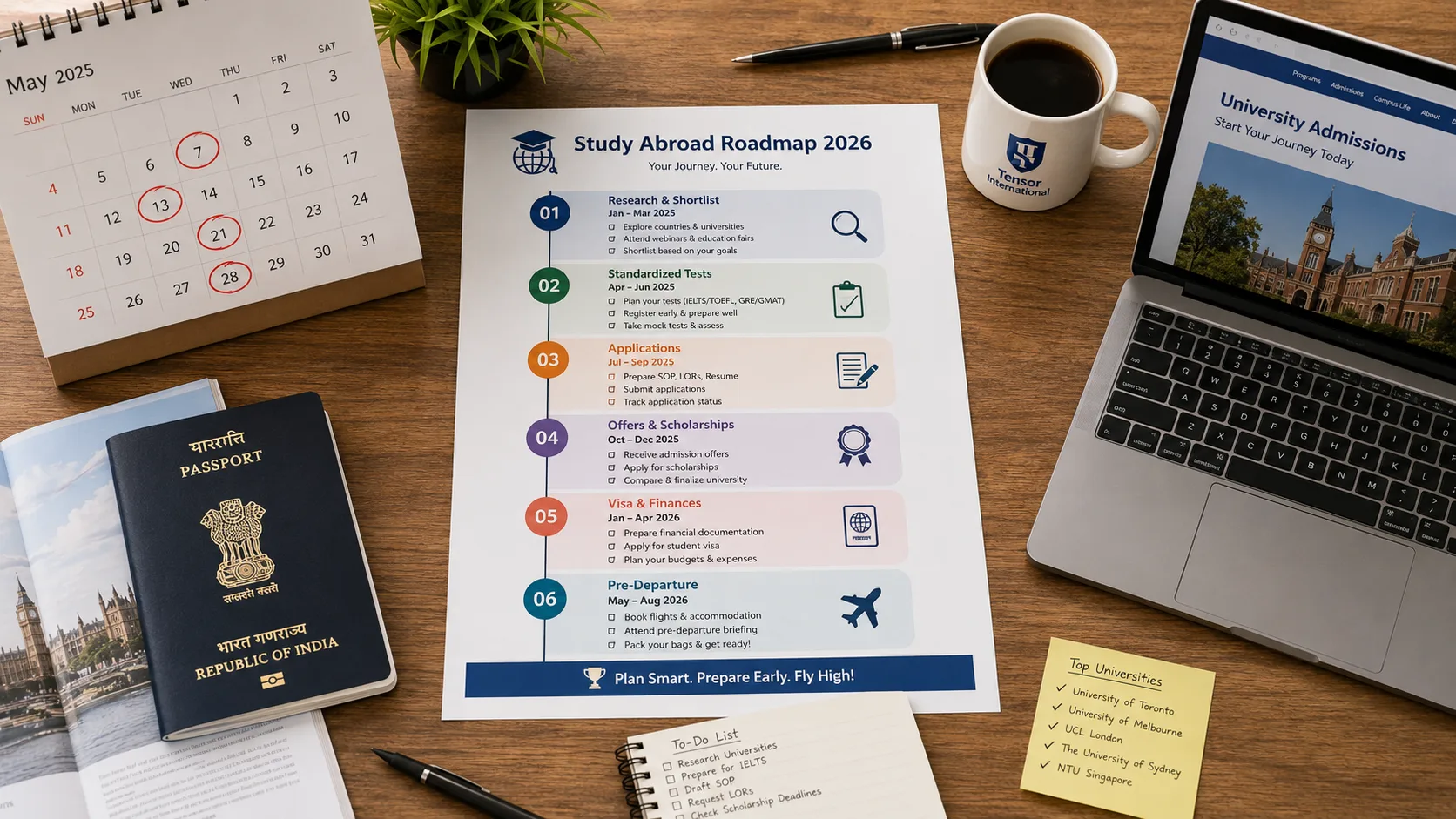
Applying to study abroad requires clear goals, careful planning, and timely preparation of documents to maximize admission success.
Define Career Goals
Identify your preferred industry, long‑term career objectives, and desired academic qualification. Clear goals help narrow down universities and programs that align with your future aspirations.
Select Your Destination
Compare countries based on budget, course availability, career opportunities, and scholarship options. Choosing the right destination ensures both academic and personal growth.
Shortlist Universities
Evaluate institutions by rankings, faculty expertise, curriculum strength, research opportunities, and graduate outcomes. A strong shortlist increases your chances of admission success.
Prepare for Language Tests
Schedule and complete required exams such as IELTS, TOEFL, PTE, or Duolingo early. Strong scores demonstrate readiness and improve admission prospects.
Gather Application Documents
Collect essential documents including SOP, LORs, transcripts, and test scores. Preparing these in advance reduces stress and avoids delays during submission.
Submit Applications
Ensure all documents are complete and submitted before deadlines. Timely applications show seriousness and prevent automatic rejections.
Review Admission Decisions
Universities may issue conditional offers, unconditional offers, or waitlist decisions. Carefully review all conditions before making a choice.
Confirm Enrollment
Accept your offer, pay required deposits, and complete enrollment formalities. This final step secures your place in the program.
Study Abroad After 12th
Many students begin their international education journey immediately after completing higher secondary education.
Popular undergraduate programs include:
- Engineering
- Computer Science
- Business Administration
- Economics
- Psychology
- Hospitality Management
- Design
- Healthcare
Students should focus on:
- Academic performance
- Language test preparation
- University research
- Scholarship opportunities
Early planning can significantly improve admission prospects.
Study Abroad for Master’s Degrees
Master’s programs remain one of the most popular study abroad pathways.
Advantages include:
- Specialized education
- Career advancement
- Research opportunities
- Global networking
Common master’s programs include:
- MS in Computer Science
- MS in Data Science
- MBA
- MSc in Finance
- MSc in Engineering
- MSc in Public Health
Students should evaluate program outcomes and industry demand before making decisions.
Study Abroad for MBA Programs
MBA programs are designed for students seeking leadership and management careers.
Top MBA destinations include:
- USA
- UK
- Canada
- Australia
- Singapore
Important factors to consider:
- Program rankings
- Industry connections
- Internship opportunities
- Alumni networks
- Return on investment
In the next section, we will explore study abroad costs, scholarships, education loans, student visas, work opportunities, and the financial planning strategies students need to successfully pursue international education.
Cost of Studying Abroad

One of the most important factors when planning international education is understanding the total cost of studying abroad.
Many students focus only on tuition fees, but the actual cost of overseas education includes several components:
- Tuition fees
- Accommodation
- Food and daily living expenses
- Health insurance
- Student visa fees
- Airfare
- Books and study materials
- Local transportation
- Personal expenses
The overall cost varies significantly depending on the country, university, course, and lifestyle choices.
Average Annual Cost of Studying Abroad
| Country | Average Tuition Fees Per Year |
|---|---|
| USA | $15,000 – $60,000+ |
| UK | £10,000 – £40,000+ |
| Canada | CAD 15,000 – CAD 45,000+ |
| Australia | AUD 20,000 – AUD 50,000+ |
| Germany | Lower tuition at many public institutions |
| Ireland | €10,000 – €35,000+ |
| New Zealand | NZD 20,000 – NZD 45,000+ |
Students should always check official university websites for the most accurate and up-to-date fee information.
Scholarships for Study Abroad
Scholarships can significantly reduce the financial burden of international education.
Many students assume scholarships are available only to top academic performers. In reality, scholarship opportunities are available for students with diverse backgrounds, achievements, and financial circumstances. There are different types of schlorships available. Check out Scholarships for Indian Students in USA
Types of Study Abroad Scholarships
Merit-Based Scholarships
Awarded based on:
- Academic excellence
- Leadership achievements
- Research accomplishments
- Exceptional talents
Need-Based Scholarships
Designed to support students who demonstrate financial need.
Government Scholarships
Offered by governments to promote educational exchange and international collaboration.
University Scholarships
Many universities provide:
- Tuition fee waivers
- Entrance scholarships
- International student grants
- Academic achievement awards
Fully Funded Scholarships
These may cover:
- Tuition fees
- Accommodation
- Living expenses
- Health insurance
- Travel costs
Students interested in studying abroad with scholarships should begin researching funding opportunities at least 12–18 months before their intended intake. Students who plan strategically can significantly lower their overall study abroad costs through scholarships and affordable university options. Check Universities which is allowing for studying at low cost or free.
How to Increase Your Chances of Getting a Scholarship
Competition for scholarships can be intense.
The following strategies can improve your chances:
Maintain Strong Academic Performance
Academic records remain one of the most important evaluation criteria.
Apply Early
Many scholarship programs have limited funding.
Early applications often receive greater consideration.
Build Leadership Experience
Universities value students who demonstrate initiative and leadership.
Examples include:
- Student organizations
- Community projects
- Volunteer activities
- Entrepreneurship
Prepare a Strong SOP
A compelling Statement of Purpose can distinguish your application from equally qualified candidates.
Apply to Multiple Scholarships
Avoid depending on a single funding source.
Applying broadly increases your chances of success.
Education Loans for Study Abroad
For many students, education loans provide an effective way to finance international education.
Education loans can help cover:
- Tuition fees
- Living expenses
- Accommodation
- Travel costs
- Educational materials
Types of Education Loans
Secured Education Loans
Require collateral such as:
- Property
- Fixed deposits
- Other eligible assets
These loans often offer higher borrowing limits.
Unsecured Education Loans
Do not require collateral but may have stricter eligibility criteria.
Approval typically depends on:
- Academic profile
- University ranking
- Course selection
- Co-applicant financial strength
Students should compare loan options carefully and understand repayment terms before making financial commitments.
Student Visa Process for Study Abroad
Receiving admission to a university is only one step in the study abroad journey.
Students must also obtain the appropriate student visa.
Visa requirements vary by country, but most applications require:
- Valid passport
- University admission letter
- Financial proof
- Health insurance documentation
- Academic records
- Visa application forms
Common Reasons for Student Visa Rejection
Understanding common mistakes can help students prepare stronger applications.
Incomplete Documentation
Missing documents are one of the most common reasons for delays or refusals.
Insufficient Financial Evidence
Students must demonstrate their ability to fund their education and living expenses.
Inconsistent Information
Information provided in visa applications should match supporting documentation.
Lack of Preparation
Some countries require visa interviews.
Preparation helps students communicate their study plans clearly and confidently.
Can Students Work While Studying Abroad?
One of the most frequently asked questions about international education is whether students can work during their studies.
The answer depends on the destination country and visa regulations.
Many countries allow eligible international students to work part-time while enrolled in academic programs.
Benefits of Student Employment
Part-time work can help students:
- Gain professional experience
- Develop workplace skills
- Build local networks
- Contribute to living expenses
However, students should prioritize academics and understand all visa-related employment restrictions.
Post-Study Work Opportunities

Many students choose overseas education because of the opportunity to gain international work experience after graduation.
Several countries offer post-study work pathways that allow graduates to seek employment after completing their studies.
When evaluating destinations, students should research:
- Graduate work permits
- Employment opportunities
- Industry demand
- Skilled migration pathways
Post-study work opportunities should be considered alongside academic quality and educational costs.
Cheapest Countries to Study Abroad
Affordability is becoming increasingly important for international students.
While costs vary significantly by institution and location, several countries are often considered more affordable compared to traditional destinations.
Germany
Known for:
- High-quality education
- Strong engineering programs
- Relatively affordable public university options
Germany has become a preferred destination for students looking for quality education with comparatively affordable tuition costs.
France
Offers:
- Internationally recognized universities
- Business and management programs
- Scholarship opportunities
Poland
An increasingly popular destination for students seeking affordable European education.
Malaysia
Known for:
- Lower living costs
- International branch campuses
- Diverse educational opportunities
Hungary
Offers competitive tuition rates and growing international student communities.
Students should evaluate total costs rather than tuition alone when comparing destinations.
Study Abroad vs Studying in India
Many students wonder whether international education provides enough value compared to studying in India.
The answer depends on individual goals.
| Factor | Study Abroad | Study in India |
|---|---|---|
| International Exposure | High | Limited |
| Global Networking | Strong | Moderate |
| Cultural Diversity | High | Moderate |
| Research Opportunities | Extensive | Varies |
| Cost | Higher | Lower |
| International Career Access | Strong | Varies |
Neither option is universally better.
Students should evaluate which pathway aligns most closely with their long-term aspirations.
Common Mistakes Students Make When Planning to Study Abroad
Avoiding common mistakes can save significant time, money, and stress.
Choosing a Country Based Only on Popularity
A destination should align with your goals rather than social trends.
Ignoring Scholarship Opportunities
Many students overlook funding opportunities that could significantly reduce costs.
Missing Application Deadlines
International admissions often operate on strict timelines.
Weak SOP and Application Materials
Strong documentation can significantly influence admission outcomes.
Poor Financial Planning
Students should prepare realistic budgets and contingency plans.
Failing to Research Career Outcomes
Course selection should consider future employability and industry demand.
Study Abroad Timeline: When Should You Start Preparing?
A successful study abroad journey usually begins well before application deadlines.
18–24 Months Before Intake
- Explore career interests
- Research countries
- Understand eligibility requirements
12–18 Months Before Intake
- Shortlist universities
- Begin language test preparation
- Research scholarships
8–12 Months Before Intake
- Complete IELTS, TOEFL, PTE, or other exams
- Prepare SOP and LORs
- Gather documents
6–10 Months Before Intake
- Submit university applications
- Apply for scholarships
3–6 Months Before Intake
- Accept admission offers
- Arrange finances
- Apply for student visa
1–3 Months Before Departure
- Book accommodation
- Arrange travel
- Attend pre-departure orientation
Early preparation generally leads to better outcomes and more options.
Future Trends in Study Abroad
International education continues to evolve.
Students are increasingly focusing on:
Return on Investment (ROI)
Evaluating educational costs relative to future earning potential.
Emerging Study Destinations
Interest in countries beyond traditional destinations continues to grow.
Career-Focused Education
Students increasingly prioritize programs with strong employment outcomes.
Industry-Aligned Skills
Fields such as:
- Artificial Intelligence
- Data Science
- Cybersecurity
- Healthcare
- Renewable Energy
continue to attract significant student interest.
Scholarship-Focused Decision Making
Funding opportunities are becoming an increasingly important factor in destination selection.
Students who remain informed about industry trends can make more strategic educational decisions.
How Tensor International Helps Students Study Abroad

Navigating international admissions can be complex.
At Tensor International, we support students throughout the study abroad journey by providing personalized guidance based on their academic background, career goals, and financial considerations.
Our services include:
Career Counseling
Helping students identify suitable academic pathways.
Country and University Selection
Supporting informed destination and institution choices.
Application Assistance
Guidance on preparing strong applications and supporting documents.
SOP and LOR Support
Helping students present their academic and professional stories effectively.
Scholarship Guidance
Identifying funding opportunities and scholarship pathways.
Student Visa Assistance
Supporting students through visa preparation and documentation.
Pre-Departure Support
Helping students prepare for life and education abroad.
Our goal is to help students make confident, informed decisions about their international education journey.
Final Thoughts
Studying abroad can be a life-changing experience that provides access to world-class education, international exposure, professional opportunities, and personal growth.
However, success requires careful planning, informed decision-making, and realistic expectations.
Students should evaluate countries, universities, courses, costs, scholarships, visa requirements, and career outcomes before making commitments.
The most successful study abroad journeys are built on research, preparation, and strategic planning rather than assumptions or trends.
Whether you are planning to study abroad after 12th, pursue a master’s degree overseas, apply for an MBA, or explore scholarship opportunities, investing time in understanding the process can significantly improve your chances of success.
With the right guidance, preparation, and commitment, international education can become an important step toward achieving your academic and professional goals. If you are planning to study abroad and want personalized guidance, professional counseling can help simplify the process, Contact Tensor International Today
Frequently Asked Questions
What is international education and why is it important?
International education refers to pursuing academic studies in a country other than your home country. It provides access to globally recognized universities, diverse learning environments, advanced research opportunities, and international career pathways. Many students choose international education to gain global exposure, develop in-demand skills, and improve their long-term employment prospects.
How do I start planning my international education journey?
The best way to begin is by identifying your career goals, preferred courses, budget, and study destination. A well-structured study abroad guide can help you understand university admissions, language requirements, scholarships, student visas, and financial planning. Starting 12–18 months before your intended intake usually provides the most options.
Which course is best for studying abroad?
The best course depends on your interests, skills, and career goals. Popular study abroad programs include Computer Science, Data Science, Artificial Intelligence, Engineering, Business Management, Finance, Healthcare, Nursing, Hospitality Management, and MBBS abroad programs.
Can I work while studying abroad?
Many countries allow international students to work part-time while pursuing their studies, subject to visa regulations. Student employment can help develop professional skills, gain work experience, and contribute toward living expenses. Students should always follow the employment conditions associated with their student visa.
Can average students study abroad?
Yes. International universities evaluate more than academic scores alone. Leadership experience, extracurricular activities, volunteer work, internships, career goals, and personal achievements can strengthen an application. Many universities offer opportunities to students with diverse academic backgrounds.
How much is the cost of studying abroad?
The cost of studying abroad depends on the destination country, university, course, and lifestyle. Expenses typically include tuition fees, accommodation, food, transportation, health insurance, and visa costs. Students should also explore scholarships and education funding options to reduce overall expenses.
Can I study abroad without IELTS?
Some universities accept alternatives such as TOEFL, PTE Academic, or Duolingo English Test. In certain cases, institutions may waive English language requirements if students meet specific academic criteria. However, requirements vary by university and country, so students should verify admission policies before applying.
Which countries offer the most scholarships for international students?
Countries such as the USA, UK, Canada, Australia, Germany, and Ireland offer numerous scholarship opportunities for international students. Funding may be provided by governments, universities, research organizations, and private foundations. Students should research scholarships early because many programs have competitive application processes.
What documents are required for study abroad applications?
Most universities require academic transcripts, a valid passport, language proficiency test scores, a Statement of Purpose (SOP), Letters of Recommendation (LORs), and a resume or CV. Certain programs may also request portfolios, research proposals, or financial documents.
How do I choose the right university abroad?
Students should evaluate universities based on academic reputation, course curriculum, faculty expertise, research opportunities, graduate employability, tuition fees, scholarship availability, location, and career outcomes. Choosing the right university should align with long-term educational and professional goals.